In today’s fast-paced digital world, a crm based platform isn’t just a luxury—it’s a necessity. From streamlining customer interactions to boosting sales efficiency, the right system can revolutionize how your business operates. Let’s dive into the ultimate guide to choosing and mastering a crm based platform.
What Is a CRM Based Platform?

A CRM based platform, or Customer Relationship Management system, is a centralized software solution designed to manage all your company’s interactions with current and potential customers. It collects customer data across multiple channels—such as email, phone, social media, and website—and organizes it into a unified database for easy access and analysis.



Core Definition and Purpose
The primary goal of a crm based platform is to improve business relationships, streamline processes, and increase profitability. By tracking every touchpoint with a customer, businesses can personalize communication, anticipate needs, and deliver faster, more accurate service. Whether you’re a small startup or a multinational corporation, a CRM system helps you stay organized and customer-focused.
Evolution of CRM Technology
CRM systems have evolved significantly since their inception in the 1980s. Early versions were basic contact management tools, often limited to storing names and phone numbers. In the 1990s, companies like Siebel Systems introduced more advanced sales force automation tools. The 2000s brought cloud-based CRM solutions, with pioneers like Salesforce leading the charge. Today’s crm based platform leverages artificial intelligence, machine learning, and real-time analytics to deliver predictive insights and automate complex workflows.
“CRM is no longer just about managing contacts—it’s about managing relationships at scale with intelligence and empathy.” — Gartner Research, 2023
Key Features of a Modern CRM Based Platform
Today’s crm based platform goes far beyond simple contact storage. It integrates sales, marketing, customer service, and even financial data into a single ecosystem. This integration allows teams to collaborate seamlessly and deliver a consistent customer experience across all touchpoints.
Contact and Lead Management
One of the foundational features of any crm based platform is its ability to manage contacts and leads efficiently. Users can store detailed profiles, track communication history, assign follow-ups, and segment leads based on behavior, demographics, or engagement level. Advanced platforms use scoring models to rank leads by their likelihood to convert, helping sales teams prioritize high-value prospects.
- Automated data capture from emails, forms, and calls
- Lead scoring and grading based on engagement
- Duplicate detection and data deduplication tools
Sales Pipeline and Forecasting Tools
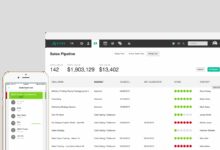
A crm based platform provides visual sales pipelines that map out each stage of the customer journey—from initial inquiry to closed deal. Managers can monitor deal progress, identify bottlenecks, and forecast revenue with greater accuracy. These tools often include drag-and-drop interfaces, customizable stages, and real-time dashboards.
- Drag-and-drop deal movement across pipeline stages
- Automated reminders for follow-ups and tasks
- Revenue forecasting using historical data and AI predictions
Marketing Automation Integration
Modern crm based platform solutions integrate tightly with marketing automation tools to deliver personalized campaigns at scale. From email drip sequences to social media targeting, CRM data fuels segmentation and personalization. For example, if a customer downloads a whitepaper, the system can automatically trigger a follow-up email series tailored to their interests.
- Email campaign tracking and performance analytics
- Behavior-based trigger automation (e.g., cart abandonment)
- A/B testing for subject lines and content
Top 5 CRM Based Platforms in 2024
Choosing the right crm based platform can be overwhelming given the sheer number of options available. To help you make an informed decision, we’ve analyzed the top five platforms based on functionality, scalability, user experience, and customer support.
Salesforce: The Industry Leader
Salesforce remains the gold standard in crm based platform technology. With over 150,000 customers worldwide, it offers unmatched customization through its AppExchange marketplace. Its Einstein AI engine provides predictive analytics, automated insights, and natural language processing for smarter decision-making.
- Highly scalable for enterprise-level operations
- Extensive third-party integrations via APIs
- Robust reporting and dashboard customization
Learn more at Salesforce Official Site.
HubSpot CRM: Best for Small to Mid-Sized Businesses
HubSpot CRM stands out for its ease of use and free tier that includes core features like contact management, email tracking, and deal pipelines. It’s ideal for startups and growing businesses that want a crm based platform without a steep learning curve.
- Free plan with no time limit
- Seamless integration with HubSpot’s marketing and service hubs
- User-friendly interface with drag-and-drop customization
Explore HubSpot CRM at HubSpot CRM.
Microsoft Dynamics 365: Best for Enterprise Integration
For organizations already using Microsoft 365, Dynamics 365 offers deep integration with Outlook, Teams, and Excel. This crm based platform excels in automating complex business processes and offers strong AI-driven insights for customer service and field operations.
- Tight integration with Microsoft Office suite
- Power BI for advanced data visualization
- AI-powered virtual agents for customer support
Visit Microsoft Dynamics 365 for more details.
Benefits of Using a CRM Based Platform
Implementing a crm based platform brings measurable advantages across departments. From improving customer satisfaction to increasing operational efficiency, the benefits are both strategic and tactical.
Improved Customer Relationships
With a complete view of each customer’s history, preferences, and pain points, teams can deliver more personalized and empathetic service. A crm based platform enables proactive outreach, such as sending birthday greetings or offering help after a product issue, which strengthens loyalty and trust.
- 360-degree customer view across all channels
- Personalized communication based on past behavior
- Faster resolution of customer inquiries
Increased Sales Efficiency
Sales teams spend less time on administrative tasks and more time selling. Automation features like task reminders, email templates, and call logging reduce manual work. Studies show that companies using a crm based platform see up to a 34% increase in sales productivity (Nucleus Research, 2023).
- Automated lead assignment and follow-up scheduling
- Real-time access to deal status and customer notes
- Mobile CRM apps for on-the-go updates
Enhanced Data Accuracy and Reporting
Manual data entry is prone to errors, but a crm based platform minimizes this risk through automation and validation rules. Centralized data ensures consistency across departments, while real-time reporting dashboards provide actionable insights into performance metrics.
- Automated data sync from multiple sources
- Customizable reports and KPI tracking
- Role-based access to maintain data integrity
How to Choose the Right CRM Based Platform
Selecting the best crm based platform requires careful evaluation of your business needs, budget, and long-term goals. A one-size-fits-all approach rarely works, so it’s essential to assess key criteria before making a decision.
Assess Your Business Needs
Start by identifying your primary objectives. Are you looking to improve lead conversion? Enhance customer service? Automate marketing campaigns? Define your pain points and map them to specific CRM functionalities. For example, a B2B company might prioritize lead scoring and pipeline management, while a B2C brand may focus on customer service and omnichannel support.
Consider Scalability and Integration
Your crm based platform should grow with your business. Ensure the platform can handle increased data volume, user count, and feature expansion. Integration with existing tools—like ERP systems, e-commerce platforms, or telephony services—is also critical. Look for platforms with open APIs and pre-built connectors.
- Check for compatibility with tools like Shopify, QuickBooks, or Zoom
- Evaluate API documentation and developer community support
- Test integration capabilities during free trials
Review User Experience and Training Support
Even the most powerful crm based platform will fail if users don’t adopt it. A clean, intuitive interface reduces training time and increases engagement. Look for platforms that offer onboarding assistance, video tutorials, and responsive customer support. Some vendors provide dedicated success managers for enterprise clients.
- Conduct usability tests with team members
- Check availability of live chat, phone, and email support
- Look for certification programs or training portals
Implementation Strategies for CRM Based Platforms
Deploying a crm based platform is more than just installing software—it’s a strategic transformation. A well-planned implementation ensures smooth adoption and maximizes ROI.
Data Migration and Cleansing
Before importing data into your new crm based platform, clean and standardize it. Remove duplicates, correct formatting errors, and verify contact information. Poor data quality can undermine the entire system’s effectiveness. Most platforms offer data import wizards and validation tools to assist in this process.
- Export existing data from spreadsheets or legacy systems
- Use deduplication tools to merge duplicate records
- Map fields correctly during import to avoid data loss
User Training and Change Management
Resistance to change is a common challenge during CRM rollouts. Address this by involving key stakeholders early, communicating the benefits clearly, and providing hands-on training. Create internal champions who can guide others and share success stories.
- Host live training sessions and webinars
- Develop quick-reference guides and FAQs
- Encourage feedback and iterate based on user input
Continuous Optimization and Feedback Loops
A crm based platform should evolve with your business. Regularly review usage reports, gather user feedback, and adjust workflows accordingly. Set up quarterly audits to identify underused features or process bottlenecks. Many platforms offer usage analytics that highlight adoption rates and feature engagement.
- Schedule monthly review meetings with department heads
- Use A/B testing to refine automation rules
- Update dashboards and reports based on changing KPIs
Future Trends in CRM Based Platforms
The future of crm based platform technology is being shaped by artificial intelligence, automation, and hyper-personalization. Staying ahead of these trends ensures your business remains competitive and customer-centric.
AI-Powered Predictive Analytics
Next-generation crm based platform systems use AI to predict customer behavior, such as churn risk, upsell opportunities, or optimal communication times. These insights allow teams to act proactively rather than reactively. For instance, if a customer’s engagement drops, the system can suggest a personalized re-engagement campaign.
- AI-driven sentiment analysis of customer emails
- Predictive lead scoring using machine learning
- Automated recommendations for next best actions
Hyper-Personalization and Customer Journey Mapping
Customers expect personalized experiences at every stage of their journey. Modern crm based platform solutions enable dynamic content delivery based on real-time behavior. By mapping the entire customer journey—from awareness to advocacy—businesses can deliver the right message at the right time.
- Behavior-triggered email and SMS campaigns
- Personalized product recommendations
- Journey analytics to identify drop-off points
Integration with Emerging Technologies
CRM platforms are increasingly integrating with IoT devices, voice assistants, and augmented reality tools. For example, a smart appliance could automatically log a service request in the crm based platform when it detects a fault. These integrations create seamless, frictionless customer experiences.
- IoT data feeding into CRM for proactive service
- Voice-to-CRM transcription for call centers
- AR-powered product demos linked to customer profiles
Common Challenges and How to Overcome Them
Despite their benefits, crm based platform implementations often face obstacles. Recognizing these challenges early allows organizations to mitigate risks and ensure long-term success.
Data Silos and Integration Issues
One of the biggest hurdles is integrating the crm based platform with existing systems. When data lives in isolated silos—like marketing automation, e-commerce, or finance—it undermines the CRM’s effectiveness. To overcome this, prioritize platforms with robust API ecosystems and middleware solutions like Zapier or MuleSoft.
- Conduct a full audit of existing software stack
- Use integration platforms as a service (iPaaS)
- Ensure real-time data synchronization across systems
User Adoption and Resistance
Employees may resist using a new crm based platform due to fear of complexity or perceived loss of control. Combat this by involving users in the selection process, providing comprehensive training, and demonstrating quick wins—like reduced manual entry or faster reporting.
- Start with a pilot group before full rollout
- Recognize and reward early adopters
- Link CRM usage to performance metrics
Cost and ROI Measurement
CRM platforms can be expensive, especially when factoring in licensing, customization, and training. To justify the investment, define clear KPIs such as sales cycle length, customer retention rate, or support ticket resolution time. Track these metrics before and after implementation to measure ROI accurately.
- Calculate total cost of ownership (TCO) over 3–5 years
- Set baseline metrics pre-implementation
- Use built-in analytics to track progress toward goals
What is a CRM based platform?
A CRM based platform is a software system designed to manage a company’s interactions with current and potential customers. It centralizes customer data, automates workflows, and provides insights to improve sales, marketing, and customer service.
Which CRM based platform is best for small businesses?
HubSpot CRM is widely regarded as the best crm based platform for small businesses due to its free plan, ease of use, and seamless integration with marketing tools. Zoho CRM and Freshsales are also strong contenders.
How does a CRM based platform improve sales?
A crm based platform improves sales by automating lead tracking, providing real-time pipeline visibility, enabling personalized outreach, and reducing administrative workload—allowing sales teams to focus on closing deals.
Can CRM platforms integrate with other business tools?
Yes, most modern crm based platform solutions offer extensive integrations with email, calendar, marketing automation, e-commerce, and ERP systems through APIs and native connectors.
Is cloud-based CRM secure?
Yes, reputable cloud-based crm based platform providers use advanced encryption, multi-factor authentication, and regular security audits to protect customer data. They often offer better security than on-premise systems.
Choosing and implementing the right crm based platform is a strategic move that can transform your business operations. From enhancing customer relationships to driving sales growth, the benefits are clear. By understanding the key features, evaluating top platforms, and planning a thoughtful rollout, you can unlock the full potential of your customer data. As technology evolves, staying ahead with AI, automation, and integration will ensure your crm based platform remains a powerful asset for years to come.
Further Reading: